Master App Retention: 7 Insights from 3 Leading Apps for Growth 2026
Updated at: June 17, 2025
An app is like a book.
If someone skims through a few pages and never returns, it failed.
If they read it once, it was decent.
But if they come back, again and again, it’s a masterpiece.
The same logic applies to mobile apps — except here, user retention isn’t just about pride. It’s about survival.
Every app today fights an expensive war called Customer Acquisition (CA). You pour money into ads, influencer promotions, SEO, partnerships — all to get that initial download. But what happens next? Most users simply vanish. Studies show that over 75% of users abandon apps within the first week.
That’s where Customer Retention (CR) becomes the real battlefield. Because keeping a customer:
- Costs far less than acquiring a new one.
- Builds loyalty, trust, and brand authority.
- Turns one-time users into lifetime revenue.
- Allows you to grow from small to dominant without constantly bleeding marketing budgets.
Acquisition creates short-term cash burn. Retention creates long-term money security.
The good news? Some companies have cracked this code. Over the last 3 years, a few apps have consistently delivered industry-leading retention rates. This isn’t luck — it’s deliberate design.
In this blog, we’ll reverse-engineer 3 apps crushing mobile app retention — and extract 7 powerful lessons you can apply to your own app starting today.
The bottom line? If you’re relying solely on ads or word-of-mouth to grow, you’re likely leaving growth on the table.
In this guide, we’ll explore a strategic mix of organic visibility tactics, smart paid campaigns, and insider growth insights to help your app not only survive — but scale with purpose and profit.
- 🔑 Insight 1: Nailed Onboarding with Immediate Personalization
- 🔑 Insight 2: Turned Progress Into a Habit Loop
- 🔑 Insight 3: Behavior-Based Push Notifications
- 🔑 Insight 4: Loyalty Programs & Rewards
- 🔑 Insight 5: Community & Social Features
- 🔑 Insight 6: Fresh Content Updates
- 🔑 Insight 7: Data-Driven Churn Prediction
- 📊 Mobile App Retention Benchmarks
- 🔚 Final Thoughts: Retention Is the Real Growth Hack
The 3 Champions of Mobile App Retention (2022–2025)
While most apps struggle to hold onto their users, a few quietly defy the odds year after year. They don’t just get downloaded — they become part of their users’ daily lives.
We dug into the data from the past 3 years and identified 3 apps that have consistently delivered some of the highest retention rates in the entire mobile app industry. They operate in completely different spaces, but they all share one thing: mastery over customer retention.
🎯 1. Duolingo — The Language Learning Habit Machine
- Industry: EdTech / Language Learning
- Retention Rates (Average):
- Day 1: ~40%
- Day 7: ~28%
- Day 30: ~20%
Duolingo has managed to turn one of the hardest human behaviors — consistent learning — into a game. Their clever use of streaks, gamification, rewards, and highly personalized progress tracking keeps users hooked far beyond the typical language learning app lifespan.
🎯 2. Starbucks — The Loyalty Engine Disguised as an App
- Industry: Retail / Coffee / Loyalty
- Retention Rates (Average):
- Day 1: ~45%
- Day 7: ~32%
- Day 30: ~25%
For Starbucks, the app isn’t just a convenience tool — it’s the center of their customer loyalty program.
From pre-orders to gift cards, customized offers, and reward stars, Starbucks has blended seamless utility with emotional triggers that drive repeat visits, both digitally and physically.
🎯 3. Strava — The Social Network for Fitness Enthusiasts
- Industry: Health & Fitness / Social Networking
- Retention Rates (Average):
- Day 1: ~42%
- Day 7: ~30%
- Day 30: ~22%
Strava has nailed the social accountability loop. Users aren’t just tracking their runs or rides; they’re sharing achievements, earning badges, and receiving encouragement from their fitness community.
This social gamification keeps people coming back for more — not just for fitness, but for connection.
Now the question is: What exactly are these apps doing right?
🔑 Insight 1: They Nailed Onboarding with Immediate Personalization
When it comes to mobile apps, first impressions don’t just matter — they decide your survival.
The first few minutes after a user installs your app are absolutely critical. It’s during this narrow window that users subconsciously decide whether your app is worth their time and attention.
That’s where onboarding personalization becomes a game-changer.
🎯 How Duolingo Does It
The moment you open Duolingo for the first time, it doesn’t ask you to navigate through endless settings or options. Instead, it greets you with one simple but powerful question:
“Why are you learning a language?”
- For travel?
- For career growth?
- For fun?
Based on your answer, Duolingo immediately customizes your learning plan. Your goals, daily targets, and lesson recommendations are tailored right from Day 1 — no guesswork required.
👉 The result? Users feel seen, understood, and invested — right from the start.
🎯 How Starbucks Does It
Starbucks goes beyond coffee. When you sign up, the app encourages you to:
- Pick your favorite store locations.
- Save your go-to drinks.
- Set preferred payment options.
- Enable order-ahead functionality.
Suddenly, every future interaction is faster, smoother, and built around your individual behavior. It feels like your Starbucks app — not a generic one.
👉 The result? Every user gets an ultra-personalized experience that saves time and builds habit.
🎯 How Strava Does It
Strava understands that fitness levels vary wildly. During onboarding, the app:
- Syncs with your wearable devices.
- Imports your historical fitness data.
- Sets default goals based on your activity type.
From the very beginning, Strava doesn’t ask you to “figure it out.” Instead, it builds a custom dashboard that aligns with your fitness journey.
👉 The result? Users feel empowered, not overwhelmed — which directly impacts long-term retention.
Personalized onboarding = emotional investment.
🔑 Insight 2: They Turned Progress Into a Habit Loop
The secret behind long-term retention isn’t just getting users to open your app — it’s getting them to want to come back every day.
That’s where habit loops come in.
A habit loop has 3 simple elements: Trigger → Action → Reward.
The top retention apps don’t leave this to chance — they engineer these loops into the core of their user experience, making app usage feel less like a task and more like a daily ritual.
🎯 How Duolingo Does It
Duolingo may be one of the best examples of habit loops in action. Here’s how it works:
- Trigger: Daily push notification (“Don’t break your streak!”).
- Action: Complete one lesson.
- Reward: Visual streak counter, XP points, achievement badges, and gems.
Duolingo’s famous streak system taps directly into human psychology. The longer you maintain your streak, the harder it becomes to skip a day. No one wants to lose a 57-day streak — even if they only log in for 2 minutes.
👉 The result? Users build the learning habit naturally, without feeling forced.
🎯 How Starbucks Does It
For Starbucks, the habit loop is tied directly to customer rewards:
- Trigger: New offer or reminder notification.
- Action: Make a purchase through the app.
- Reward: Earn Stars, unlock free drinks, bonus points on specific days.
Starbucks smartly layers its reward system to encourage frequent, predictable visits — especially during mornings and seasonal promotions.
👉 The result? Buying coffee feels like progress toward free rewards, turning occasional buyers into daily loyalists.
🎯 How Strava Does It
Strava’s habit loop is deeply social:
- Trigger: Push notifications for new personal records, or friend activity.
- Action: Log a workout or engage with the community.
- Reward: Earn badges, receive “Kudos” (likes), climb leaderboards, and get social recognition.
Fitness is hard to maintain alone, but Strava transforms personal goals into community-driven achievements. The positive reinforcement keeps users engaged both physically and socially.
👉 The result? Users don’t just log workouts — they build a lifestyle and identity around the app.
🔑 Insight 3: Behavior-Based Push Notifications
Push notifications can either be your app’s greatest retention weapon — or the fastest way to get uninstalled.
The problem? Most apps blast generic, irrelevant notifications that annoy users instead of engaging them.
The best retention-focused apps do something different: they make push notifications personal, timely, and behavior-driven.
🎯 How Duolingo Does It
Duolingo’s notifications feel like a personal coach nudging you:
- “You’re just one lesson away from keeping your 10-day streak alive!”
- “It’s language time — your daily goal is waiting.”
Notice:
- It references your streak.
- It triggers FOMO (Fear of Missing Out).
- It arrives at your usual practice time (based on your app usage patterns).
👉 The result? Notifications feel helpful, not pushy — and users are far more likely to act on them.
🎯 How Starbucks Does It
Starbucks uses purchase history, time of day, and user preferences to deliver laser-targeted notifications:
- “Your usual Caramel Macchiato is waiting — skip the line with Mobile Order & Pay.”
- “Double Star Day tomorrow! Earn extra points on your morning coffee.”
Instead of simply promoting new offers, Starbucks turns every notification into a personalized incentive that’s hard to ignore.
👉 The result? Notifications drive both immediate actions and strengthen long-term loyalty.
🎯 How Strava Does It
Strava’s notifications aren’t just reminders — they build community-driven motivation:
- “Your friend John just completed a 5K run — ready to beat your record?”
- “You’re 3 rides away from hitting your monthly goal.”
By tying notifications to personal goals, peer activity, and challenges, Strava fuels both individual competition and group accountability.
👉 The result? Users stay connected, competitive, and committed — key ingredients for long-term retention.
🔑 Insight 4: Loyalty Programs & Rewards
At its core, retention is about incentivizing repeat behavior. One of the most powerful ways apps achieve this is through well-designed loyalty programs and in-app rewards.
But here’s the key difference: these aren’t simple “points systems.” They’re carefully engineered to create emotional triggers, satisfaction loops, and long-term customer attachment.
🎯 How Duolingo Does It
While Duolingo isn’t a traditional loyalty program, it masterfully integrates micro-rewards:
- Gems: Earned by completing lessons, maintaining streaks, or watching ads.
- Hearts: Represent the number of mistakes you can make before needing to practice or wait.
- XP (Experience Points): Fuel progress in leagues, leaderboards, and personal milestones.
These small rewards stack up daily, making learning addictive and giving users something to strive for beyond just mastering a language.
👉 The result? Users feel rewarded for consistency, not just outcomes — driving daily engagement.l seen, understood, and invested — right from the start.
🎯 How Starbucks Does It
Starbucks may be the gold standard for loyalty-driven retention:
- Stars for Purchases: Earn stars for every rupee/dollar spent.
- Tiered Rewards: Free drinks, exclusive offers, and birthday treats.
- Double Star Days: Timed promotions that supercharge earning potential.
The beauty lies in transparency — users clearly see how far they are from their next free coffee, creating a constant incentive to return.
👉 The result? Starbucks converts casual customers into daily loyalists — often visiting purely to “keep the stars flowing.”
🎯 How Strava Does It
Strava’s rewards lean heavily into social recognition and personal achievement:
- Badges: For completing challenges, hitting personal bests, or achieving monthly goals.
- Virtual Races: Compete with others globally in sponsored or community challenges.
- Sponsorship Rewards: Occasionally partner with brands to offer real-world prizes.
Instead of traditional points, Strava taps into intrinsic motivation — the pride of personal progress and the external validation from peers.
👉 The result? Users stay engaged not just for health, but for status, recognition, and ongoing growth.
🔑 Insight 5: Community & Social Features
Human beings are wired for connection.
Apps that successfully build strong social or community layers tap into one of the most powerful forces in retention: social accountability + belonging.
When users feel like part of a tribe, quitting isn’t just walking away from an app — it’s leaving their group, their identity, their mini-community. That’s retention gold.
🎯 How Duolingo Does It
While Duolingo is often seen as a solo learning tool, it smartly adds subtle social hooks:
- Leaderboards: Users compete against friends and global learners for ranking.
- Friend Challenges: Invite friends, track each other’s progress, and stay motivated.
- Streak Sharing: Publicly display learning streaks for accountability and pride.
Even if you’re studying alone, you’re not alone — you’re part of a global learning movement.
👉 The result? The simple act of learning becomes competitive, social, and sticky.
🎯 How Starbucks Does It
Starbucks blends physical and digital social triggers:
- Gifting: Send digital gift cards directly from the app — social currency for birthdays, holidays, or casual thank-yous.
- Shared Rewards: Invite friends to join loyalty programs, boosting social influence.
- Social Promotions: Seasonal offers that encourage users to involve others (“Buy one, get one” deals, holiday campaigns, etc.).
The app strengthens not just the user’s relationship with Starbucks, but also connects Starbucks to their social circle.
👉 The result? Users become informal brand ambassadors, pulling others into the ecosystem.isiting purely to “keep the stars flowing.”
🎯 How Strava Does It
Strava fully leans into social networking:
- Activity Feed: Users see workouts, routes, and milestones from friends.
- Kudos & Comments: A built-in feedback loop of encouragement and support.
- Clubs & Groups: Join local or interest-based fitness communities.
- Global Challenges: Participate in worldwide events alongside thousands of others.
Strava’s genius lies in making fitness public. The accountability of friends watching your progress subtly motivates continued activity.
👉 The result? Users keep showing up, not just for personal health, but for the encouragement, recognition, and social identity.ition, and ongoing growth.
🔑 Insight 6: Fresh Content Updates Keep the Experience Alive
No matter how great your app is, stagnation is a retention killer.
Users crave novelty. They want to feel like the app is evolving, improving, and constantly offering something new. The best retention-focused apps don’t let users grow bored — they roll out fresh content, features, and challenges to keep the experience feeling alive.
🎯 How Duolingo Does It
Duolingo treats its content like a living, breathing curriculum:
- New Courses & Languages: Regularly adding new languages and dialects.
- Updated Lesson Formats: Introducing speaking challenges, audio lessons, and storytelling formats.
- Seasonal Challenges: Special XP boosts, league promotions, or limited-time quests.
Even long-term users constantly have something new to explore, keeping the learning journey fresh and exciting.
👉 The result? Long-time users never feel like they’ve “completed” Duolingo — there’s always something more.
🎯 How Starbucks Does It
Starbucks updates its app content through:
- Seasonal Menus: Limited-time drinks (Pumpkin Spice Latte, holiday specials).
- Themed Promotions: Targeted offers around major holidays, weather shifts, or customer birthdays.
- App Interface Updates: Occasional UI refreshes and smoother user flows.
This gives regular customers new reasons to open the app, discover offers, and engage with Starbucks even outside their usual habits.
👉 The result? Returning to Starbucks feels fresh and festive, not repetitive.
🎯 How Strava Does It
Strava keeps content dynamic by:
- Monthly Challenges: Rotating running, cycling, and swimming goals.
- Partnered Events: Collaborations with fitness brands offering new virtual races.
- New Features: Continuous release of training analysis tools, group challenges, and upgraded leaderboards.
Strava users always have a new goal to chase, a new feature to try, or a fresh community event to join.
👉 The result? Even veteran athletes stay engaged because there’s always a “next challenge” waiting.
🔑 Insight 7: Data-Driven Churn Prediction
The final retention superpower?
Catching churn before it happens.
The top apps don’t just react when users leave — they predict who’s at risk and take action proactively. That’s where data-driven churn prediction becomes a secret retention weapon.
By analyzing behavior patterns, usage frequency, engagement drops, and historical trends, these apps can flag users who are silently slipping away — and re-engage them before it’s too late.
🎯 How Duolingo Does It
Duolingo monitors:
- Drop-offs in streaks.
- Lower practice consistency.
- Missed daily goals.
When it detects slipping behavior, it fires off personalized win-back notifications like:
- “Don’t lose your progress — you were doing great!”
- “Quick 2-minute lesson to stay on track!”
Sometimes, it even offers limited-time XP boosts or streak freezes to lower the barrier of re-engagement.
👉 The result? Duolingo revives users before they fully disengage.
🎯 How Starbucks Does It
Starbucks watches:
- Declining order frequency.
- Missed seasonal promotions.
- Decreasing app opens or purchases.
The app may then trigger:
- Personalized discounts (“We miss you! Here’s 50% off your next drink.”)
- Limited-time rewards (“Come back this week and earn double stars!”)
- Birthday treats or seasonal reminders.
👉 The result? Starbucks actively pulls back slipping users, making re-engagement feel rewarding rather than desperate.
🎯 How Strava Does It
Strava analyzes:
- Decreased activity logging.
- Gaps in community engagement.
- Breaks in challenge participation.
Strava counters churn with:
- New goal suggestions (“Get back on track with a 5K this week.”)
- Friend-based nudges (“Your friends completed 3 rides this month — join them?”)
- Exclusive community challenges.
👉 The result? Users feel gently encouraged to return to activity, not shamed or pressured.
📊 Mobile App Retention Benchmarks (So You Know Where You Stand)
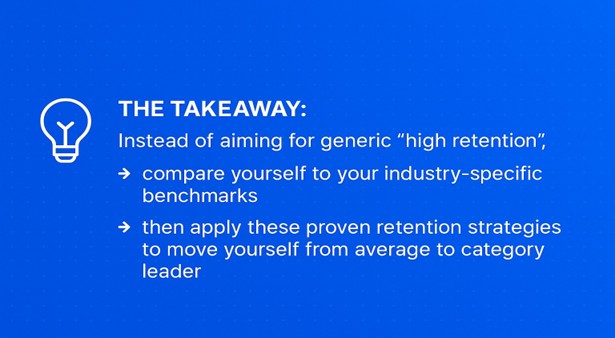
By now, you’ve seen what the top performers like Duolingo, Starbucks, and Strava are doing to drive impressive retention.
But before you compare your own app to them, it’s important to understand industry context because not all apps are fighting the same battle.
Retention rates vary significantly across industries based on user intent, session frequency, competition, and even emotional investment. Here’s a simple benchmark snapshot to help you gauge where you stand:
| Industry | Day 1 Retention | Day 7 Retention | Day 30 Retention |
|---|---|---|---|
| E-Commerce / Retail (ex: Starbucks) | 35–45% | 20–30% | 10–20% |
| Social / Community Apps (ex: Strava) | 40–50% | 25–35% | 15–25% |
| EdTech / Learning Apps (ex: Duolingo) | 35–45% | 20–30% | 10–20% |
| Health & Fitness | 30–40% | 18–25% | 8–18% |
| Finance / Banking | 50–60% | 35–45% | 25–35% |
| Gaming (Casual / Mid-core) | 30–40% | 15–25% | 5–10% |
| Productivity / Utility Apps | 25–35% | 15–20% | 5–10% |
🧠 A few things to notice:
- Apps like finance, banking, or utilities naturally enjoy higher retention because of high switching costs and essential daily use.
- Gaming and productivity apps face rapid churn due to short novelty cycles.
- Apps that create habitual, daily-use routines (like Starbucks, Strava, Duolingo) fight for their retention daily — but when done right, their users become incredibly sticky.
🎯 Where our 3 case-study apps sit:
- Duolingo (EdTech): Outperforming EdTech industry averages across all timeframes.
- Starbucks (Retail): Significantly ahead of typical e-commerce benchmarks thanks to loyalty and habit loops.
- Strava (Fitness + Social): Exceeding industry averages due to strong community integration and social rewards.
🔚 Final Thoughts: Retention Is the Real Growth Hack
In today’s app economy, where customer acquisition costs are soaring and attention spans keep shrinking, the real game isn’t just about getting users through the door — it’s about making sure they stay.
The apps that dominate their categories aren’t winning because they found some secret viral hack. They’re winning because they’ve built systems that keep users engaged, valued, and emotionally invested long after that first download.
Duolingo, Starbucks, and Strava have all mastered this by focusing on the experience that comes after installation.
They’ve made onboarding feel personal from the very first screen, designed natural habit loops that reward daily interaction, and crafted smart notifications that feel like timely nudges rather than interruptions.
Their loyalty programs don’t just offer points — they make every visit feel like progress. They’ve tapped into the power of community, kept their content fresh to prevent fatigue, and used data to predict churn before it happens.
Retention isn’t a side project for these brands — it’s baked into their entire product DNA.
The beauty of these strategies is that they’re not reserved for billion-dollar companies. No matter where your app stands today, you have the opportunity to apply the same principles.
Start by understanding where your users tend to drop off. Look for small wins where personalization, habit-building, or social features can nudge them to stick around just a little longer.
Over time, these small shifts stack into meaningful retention lifts — and with every extra day a user stays, their lifetime value grows, while your dependency on expensive new user acquisition shrinks.
Retention isn’t flashy. It doesn’t always make headlines. But it’s the compound interest of the app world. The earlier you build for it, the bigger your payoff will be in the months and years ahead.
![Mobile App User Acquisition in [year]: Winning Strategies for a Crowded Marketplace](https://www.innovination.com/wp-content/uploads/2025/06/img1-150x150.jpg)
![In-App AI: The Evolution of Apps in [year] and Beyond](https://www.innovination.com/wp-content/uploads/2025/06/inapp1-150x150.jpg)